Netcompany-Intrasoft · Current role
Owning the backlog on a five-year EU modernisation programme
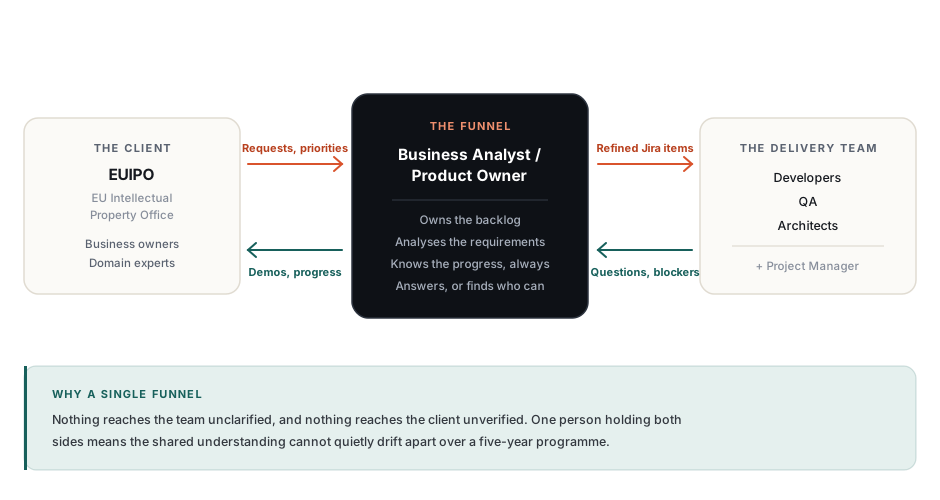
I own the backlog across four Agile teams on a five-year programme to modernise the EUIPO information system with automation and AI. Every piece of information between the client and 40+ delivery people passes through me. The clearest proof that this works is an AI capability that went from idea to production in three months.
The context
The client is the European Union Intellectual Property Office (EUIPO), the EU agency responsible for registering and managing trademarks and designs that are valid across every EU member state. Its information system is what examiners, legal staff and applicants across the whole of the EU rely on to handle those cases, which is the scale the modernisation programme has to work at, on a five-year plan rather than a quarterly roadmap.
What we are adding to that system is automation and AI, which changes how the institution's own people work day to day.
The core challenge
Two groups that both know a great deal about completely different things, and cannot afford to misunderstand each other over five years. My role sits between them.
Signs Comparer: a selected delivery, from idea to production in three months
Signs Comparer was the first project on the programme where I took full ownership end to end, alongside doing much of the requirements analysis myself. The results were strong enough that the client asked us to carry the same working model into the projects that followed.
Signs Comparer is an AI-driven capability that assists EUIPO examiners with trademark opposition and cancellation cases. This is judgement-heavy work, so the tool has to fit the way examiners actually reason or it will not get used.
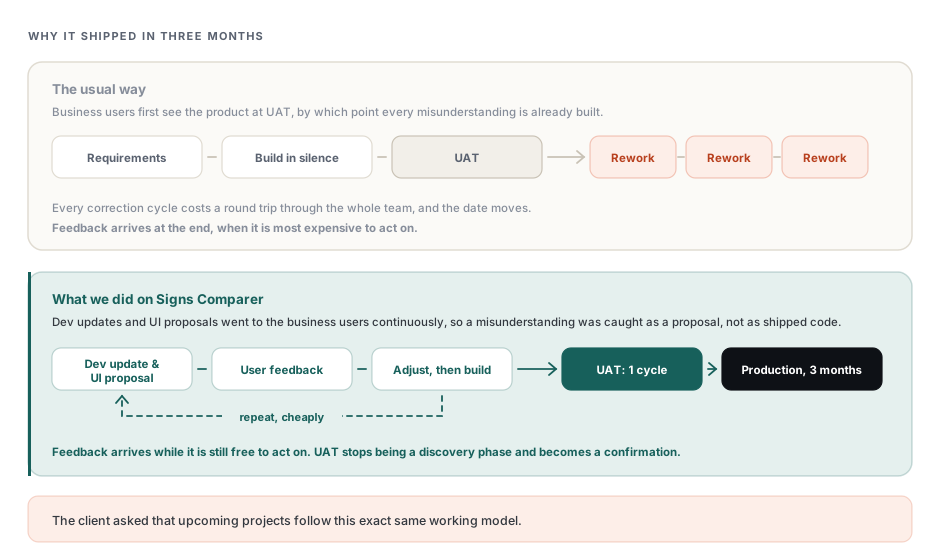
My role on it was the same one I carry across the programme: translating what the client needed into something the team could build. Here that meant more requirements analysis than usual. There were many open points, and the client did not always know exactly what they wanted going in, so I drew it out by sharing development updates and UI proposals with the business users continuously, well before anything was final, and using their feedback to close out clarifications. Misunderstandings surfaced while a screen was still a proposal, not a built feature.
What that produced:
- A workflow that stayed exceptionally lean and closely aligned to real user needs.
- UAT completed in a single cycle with only minor issues, because the business users had already seen and shaped every screen by that point.
- Production in three months, a record for this client given the size of the programme.
The result that mattered most
Delivering quickly is one thing. More significant was that the client saw how efficiently it went and specifically asked that upcoming projects follow the same direction and working model. The approach outlasted the project itself.
What I own across the programme
The backlog, across four teams
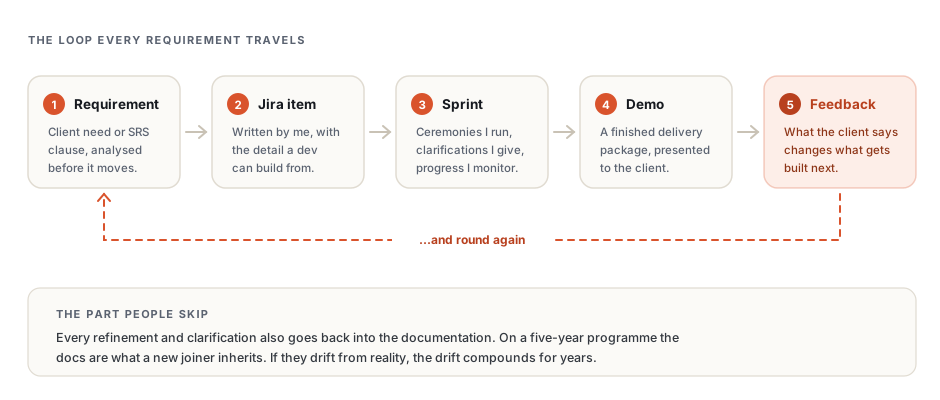
Every work item in Jira that comes out of a product requirement is mine to open, write and track, across four Agile teams of 10+ people each. This is where a client's high-level specification, general and light on detail by design, gets turned through analysis and clarification into something a developer can build without guessing. I know what is in the backlog, what is coming next, and where each delivery stands at any given moment, because being asked and not knowing is the one thing this role cannot afford.
At this scale, keeping the backlog accurate is what keeps four teams and the client working from the same picture of what matters next and what is already done.
Acting as the channel between client and team
New requests from the client come to me first. I analyse them, work out what they imply and carry them to the team. Questions from the team come back the same way: I answer from what I already know, or I find the person who can. I then report back to the client. Working closely with the Project Manager keeps the commercial and delivery views of the programme aligned.
Daily stand-ups and client reporting
I facilitate the daily stand-ups for all four teams, and I sometimes run the weekly report meetings with the client as well. I manage the sprints and the Jira boards, and keep the dashboards current so that progress monitoring takes a glance rather than a meeting. Release planning and delivery monitoring I handle in partnership with the Project Manager. The real work of facilitating is not scheduling, it is making sure the difficult point gets raised early enough to do something about it.
Demos and client feedback
When a delivery package is complete I present the demo to the client. What comes back is the list of things we understood slightly differently from how they intended, and we make the corresponding changes.
Documentation
I study and analyse all the SRS and product documentation closely enough to hold a clear picture of the system. When a developer's question is about something we specified, the documentation usually settles it straight away; when the answer depends on someone outside our requirements, it can still take a while to chase down. When a refinement or clarification changes what is true, I update the documentation. On a five-year programme, the documentation is what the next person inherits.
Why this is product work
Passing a message along is straightforward. The value sits in the analysis in the middle: deciding what a request really means, what it costs, what it conflicts with, and what has to be true before it can be built. That judgement is the job, and the meetings are simply where it becomes visible.
Day-to-day responsibilities
- Client and stakeholder management and alignment, keeping expectations and reality in the same place.
- Customer needs analysis and product requirements alignment, turning a need into a specified requirement.
- Requirements analysis and clarification, including the questions nobody thought to ask.
- Translating requirements into Jira items that a developer can build from.
- Backlog management, sprint management and progress monitoring.
- Release planning, delivery management and monitoring.
- Product demos and stakeholder feedback, and the modifications that follow.
- Daily stand-up facilitation and client reporting.
- Jira boards and dashboards management.
- Updating documentation based on every refinement and clarification.
- Cross-functional team collaboration with developers, QA, architects and the Project Manager.